
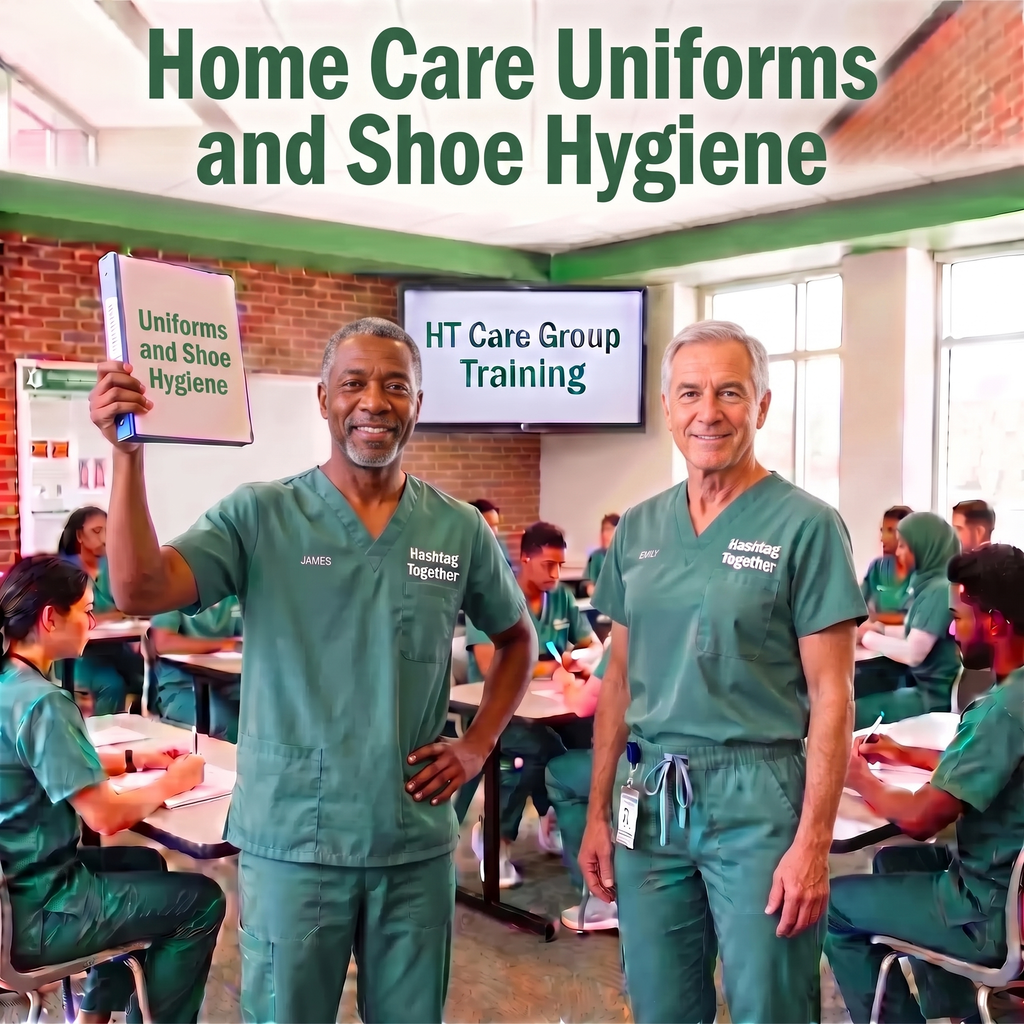
Training Article: Home Care Uniforms and Shoe Hygiene
Keeping the Home Clean, Safe, and Comfortable for the Person-Served
When providing care in a person-served’s home, employees have a responsibility to protect the health, safety, comfort, and dignity of the individual. Something as simple as what we wear—and what we wear on our feet—can have an important impact on infection prevention, fall prevention, and the cleanliness of the home.
For this reason, all employees of Hashtag Together Care Group are expected to follow the home-care shoe hygiene procedure outlined below.
Outdoor Shoes Stay at the Door
Before entering the living space of the person-served, employees must remove their outdoor shoes and leave them at the door or in the designated area.
Outdoor shoes can collect and carry dirt, moisture, bacteria, allergens, chemicals, and other debris from sidewalks, parking lots, public areas, bathrooms, stores, and other environments. Bringing these contaminants into a person’s living space can unnecessarily expose the individual and their home to outside contaminants.
Leaving outdoor shoes at the door helps create a cleaner transition between the outside environment and the person’s home.
Employer-Provided Indoor Shoes Must Be Worn
After removing outdoor shoes, employees should change into the indoor shoes provided by Hashtag Together Care Group.
Indoor shoes are intended specifically for use inside the homes where care is provided. Employees must:
- Remove outdoor shoes before entering the person’s living space.
- Change into their employer-provided indoor shoes.
- Keep their indoor shoes on while providing care inside the home.
- Use the indoor shoes only for their intended purpose.
- Keep indoor shoes clean and in good condition.
- Notify their supervisor if their indoor shoes become damaged, excessively worn, or no longer provide adequate traction.
- Follow any additional infection-control, housekeeping, or safety procedures established by Hashtag Together Care Group.
Indoor shoes should remain on while the employee is in the home. Employees should not switch back and forth between outdoor footwear and indoor shoes during their shift unless specifically required by the situation or directed by a supervisor.
Why Indoor Shoes Are Important
Indoor shoes serve more than a cleanliness purpose. They are also an important part of maintaining a safe caregiving environment.
1. Preventing Falls and Slips
A person-served may have mobility limitations, balance concerns, physical disabilities, or other circumstances that make falls especially dangerous. Employees may also need to move quickly or assist with transfers, walking, bathing, toileting, housekeeping, or other activities.
Wearing appropriate indoor shoes with skid-free, slip-resistant soles helps provide traction on common household surfaces such as:
- Hardwood and laminate flooring
- Tile
- Vinyl
- Kitchen and bathroom floors
- Smooth or polished surfaces
- Floors that may occasionally become damp
A skid-free sole can help reduce the likelihood that an employee will lose their footing while walking or assisting the person-served.
Good traction is particularly important when providing hands-on assistance. If an employee slips while supporting a person-served, both individuals may be placed at risk of injury.
2. Reducing Tracking of Outdoor Bacteria and Debris
The bottoms of outdoor shoes come into contact with many surfaces throughout the day. Soil, mud, dust, food residue, animal waste, moisture, and microorganisms can be picked up on footwear and transported from one location to another.
Wearing dedicated indoor shoes helps create a physical barrier between outdoor environments and the person’s living space.
This practice supports good hygiene by reducing the amount of outside dirt and debris brought into the home and helps maintain a cleaner environment for the person receiving care.
3. Protecting the Person-Served’s Living Environment
A person’s home is their personal living space. Employees should treat it with the same respect they would expect for their own home.
Removing outdoor shoes and changing into clean indoor footwear demonstrates consideration for:
- The cleanliness of the home
- The comfort of the person-served
- Infection-prevention practices
- Household surfaces and flooring
- The person’s personal preferences and dignity
Maintaining a clean caregiving environment is part of providing respectful, professional care.
What Makes a Good Indoor Care Shoe?
Employer-provided indoor shoes should be appropriate for the work being performed and maintained in a sanitary, safe condition.
Employees should ensure their indoor shoes:
Are skid-free/slip-resistant:
The sole should provide dependable traction rather than easily sliding across smooth floors.
Fit properly:
Shoes that are too loose, too tight, or unstable can interfere with safe movement.
Are clean:
Indoor shoes should not be visibly dirty or contaminated.
Are in good condition:
Worn-down soles, damaged materials, loose components, or other defects can reduce safety.
Are appropriate for caregiving activities:
Footwear should allow employees to safely walk, stand, bend, assist with mobility, and perform their assigned duties.
Skid-Free Does Not Mean “Fall-Proof”
Slip-resistant footwear is an important safety measure, but it cannot eliminate every risk of falling.
Employees should continue to:
- Watch for wet or slippery floors.
- Report spills promptly.
- Use appropriate caution on stairs.
- Keep pathways clear when possible.
- Follow proper body mechanics and transfer procedures.
- Use required mobility and transfer equipment.
- Follow the person’s established care and safety plan.
- Report unsafe conditions to a supervisor.
Safe footwear works together with safe practices—it does not replace them.
Maintaining Indoor Shoes
Employees are responsible for helping keep their employer-provided indoor shoes clean and safe.
Indoor shoes should be checked regularly for:
- Excessive wear on the soles
- Loss of traction
- Cracks or damage
- Contamination
- Loose or broken components
- Any condition that could create a trip or slip hazard
If indoor shoes are no longer suitable for safe use, the employee should notify their supervisor and follow Hashtag Together Care Group’s procedure for obtaining a replacement.
The Standard: Clean Shoes In, Safe Shoes On
The shoe-changing routine should become a consistent part of every home-care visit:
1. Arrive at the home.
2. Remove outdoor shoes at the door/designated area.
3. Put on Hashtag Together Care Group-provided indoor shoes.
4. Keep indoor shoes on throughout the visit.
5. Ensure footwear remains clean and provides adequate traction.
6. Change back into outdoor shoes when leaving the home.
Professionalism Starts at the Door
Small practices can have a significant impact on quality care. Removing outdoor shoes, wearing designated indoor footwear, and choosing skid-free footwear demonstrate that an employee understands their responsibility to protect the person-served and their living environment.
At Hashtag Together Care Group, cleanliness, safety, infection prevention, and fall prevention are everyone’s responsibility.
Remember: Leave the outside at the door. Change into clean, skid-free indoor shoes. Keep them on while providing care.
This simple routine helps us provide safer, cleaner, and more respectful care in the homes of the people we serve.